
Army in Vietnam The Vietnam War was the legacy of France's failure to suppress nationalist forces in Indochina as it struggled to restore. This site provides external links as a convenience to our users. The appearance of external hyperlinks on the Jefferson County Schools (JCS) website does not. Sixth Army commander, General Walter Krueger, was notorious for cracking down on subordinates whose attacks fizzled during the. Webmaster Note: The complete text of Paths of Armor has been re-created in its entirety. Page numbers have been left in to aid cross referencing the book.
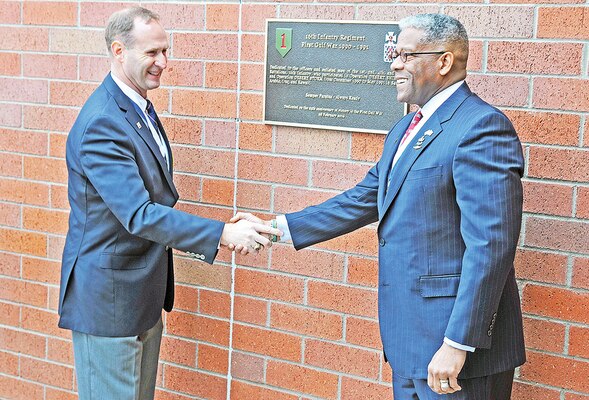
County veteran of World War II still waiting for Purple Heart. By Bethany Nolan 3. Army infantrymen who landed at Oran, Africa.
World War II, he recalled that day clearly: . It was during one of those battles. Mc. Intosh recalled seeing another of his buddies .

They tried to push us off the sand, back into the water. The bluish pieces of metal in his hand. Soldiers Leonard Wayne Mc. Intosh, left, and his buddy Walter Keegan.
World War II. Courtesy photo. There. are other recollections. He can remember swimming across the Tiber. River, towing a line that his fellow soldiers then used as a guide.
And when his unit arrived in Corsica, he saw the. Italian dictator Benito Mussolini hanging in an archway. Even. darker memories include helping liberate the Buchenwald.
Two infantry regiments that would become part of the 32 D North Carolina Historic Sites, a group of 27 unique state historic sites, invites you to open doors into the past and more fully understand the world we live in today.
He walked among the ovens full of ash, and saw. In France, as part of a planned. Germans during the Battle of the Bulge, he and a. But. once inside, the heavy stone walls crashed down around them. But after surgery using part of his ankle bone to fuse his.
Mc. Intosh proved them wrong. After that, he said, he worked. Supreme Headquarters Allied Expeditionary Force, where he. Gen. Months later, when father met son at. Bloomfield train depot, the elder man tossed away that worn. Army Photo. Home. After. Mc. Intosh returned home, he was hanging out with friends on the.
Bloomfield . The two married May 1. Oaklene, now 8. 0, is well- known in the community, having. Richland Township. Trustee for 1. 4 years. The two live in a cozy ranch- style home north. Bloomfield, their green expanse of lawn filled with peaceful.
On one wall of the. Mc. Intosh in his military garb, and a Combat Infantry. Badge. It also holds two Bronze Stars, the first for the campaign in. Africa, the other for Europe.
Former Monroe County veterans service officer John Tilford, a family. Mc. Intosh get his medals despite a fire that destroyed. But the military has refused to. Purple Heart, the medal for service personnel wounded or.
Baron. Hill and Brad Ellsworth. Now 8. 4, and using a wheelchair much of the. Mc. Intosh isn. Mc.
Intosh was a member of the 3. Infantry Regiment. Click here for video interview of.
Leonard Mc. Intosh: http: //www. Third Infantry Division in Europe, is similarly stoic about.
Then there were the broken back and broken neck suffered. French farm house collapsed onto him from. Mc. Intosh is low- key regarding the U. S. Army Board of Correction for. Military Records.
Democratic congressmen. Baron Hill and Brad Ellsworth co- signed a request that the military. Purple Heart for Mc. Intosh, apparently to. Mc. Intosh seems at peace with it all.
His son, Kenny, came along to help his dad get around. Nov. 1. 2 Hoosier Honor Flight visit to Washington, D. C. Army, Ret., who helped orchestrate the. Hoosier Honor Flight, remains incredulous that Mc. Intosh is without a.
Purple Heart. Tilford knows official military records regarding.
The History of the 4. Infantry Division CALIFORNIA'S. OWN: THE HISTORY OF THE CALIFORNIA'S. TH INFANTRY DIVISIONby. Dan Sebby The. Beginning and The Great War. The 4. 0th Infantry Division (Mechanized).
Camp Kearney California at San Diego on 1. September. 1. 91. World War I. Known. Division (there were not yet cavalry or armored. National Guard unit from Arizona. California, Colorado, Nevada, New Mexico, and Utah. It was soon. decided that the new division's nickname would be the .
The division. was one of the best prepared for the great mobilization since. Mexican Border. In November the Division moved to Camps. Lewis and Funston where the division received over 9,0. But. almost immediately trained soldiers of the division were siphoned. The first to go were 1,2. Engineer Regiment and the 5.
Pontoon. Train. This was a start of what the division would experience. In April of 1. 91. Again though the division. Before departing overseas, the unit were. Infantry Regiment were born out of.
California Infantry Regiment. Likewise, the. 1st and 2d California Field Artillery Regiments became the 1. Field Artillery Regiment while the 1st Squadron, California. Cavalry turned in their horses and became the 1. Machine Gun. Battalion. When the division arrived in France in August.
Germans had just completed a series of offensives. March and ended on 1. July 1. 91. 8. These offensives. American Expeditionary Force before. They almost succeeded. It was decided. that the new divisions would be used as depot divisions, supplying. By the. end of the war, over the 4.
Division provided over 2. Division. The most famous of these former . This company was to. Captain Holderman was decorated with the Medal of Honor. California Medal of Valor for his actions during the Battle. Argonne. Another company commander in that battalion was. Captain Leo Stromee from the old Company K, 7th California who.
Silver Star. The old 7th also provided Captain Arthur. King who received the Distinguished Service Cross for his service. Division. At the end of the war, the 4. An. additional 1. Camp Kearney. Post Hospital. On 2. 0 April 1. 91. Camp Kearney, where they were form just two years.
To view the 1. 91. Order of Battle CLICK HEREBetween. Wars. The division was reconstituted on 1. June 1. 92. 6 with. Berkeley. This was later changed to Los Angeles.
The division was organized pretty much as it was in 1. Nevada and Utah. In November of that year, prisoners. Folsom State Prison seized control of the main buildings. The warden was unable.
Governor for the National. Guard. Telephone calls and announcements over the radio were made. When the action. was over, 1. For the rest of the 1. Several. of the enlisted members who had joined the unit during the twenties.
NCO and commissioned. One of the most notable was Sacramento dentist.
Roy A. Green, who joined the 1. Infantry Regiment as a private. Company A. the 1st Battalion, and later the entire regiment. When the war. ended, he was the officer who accepted the Japanese surrender. Seoul, Korea. He was to eventually become a Major General.
Infantry Division. To view the 1. 94. Order of Battle CLICK HEREWorld War. IIIn response to the war in Europe, the California's 4. Infantry. Division was mobilized on 3 March 1. Camp San Luis. Obispo where it remained, except for divisional maneuvers at Fort. Lewis, Washington, until the attack on Pearl Harbor.
While most. of the division was from California, some of the supporting artillery. Nevada and Utah. Almost. The 4. 0th Tank Company from Salinas was sent.
Philippine Islands in 1. Company C, 1. 94th. Tank Battalion. That battalion, made up of National Guardsmen. California, Minnesota, and Missouri, along with the 2. Cavalry Regiment (Philippine Scouts) were the covering force during.
Bataan Peninsula. When Bataan fell, these brave. Californians, along with other US Army, Philippine Scouts, and. Philippine Commonwealth Army soldiers, were part of the Bataan.
Death March and the subsequent imprisonment and slavery. The division's observation squadron, the. Army Air Forces where the served.
The 1. 15th was later to form the backbone of. California Air National Guard when the Air Force was formed. Within 4. 8 hours of the attack on Pearl Harbor.
Camp San Luis Obispo was a ghost town as elements of the 4. Infantry Division took defensive and security positions over a.
Southern and Central. California to Yuma, Arizona and Salt Lake City, Utah. They dug. in and prepared for what was thought to be the inevitable Japanese. West Coast. In February of 1.
This resulted. in the 1. Infantry Regiment being made excess. That regiment. went on to do great things during the war as part of the 7th Infantry.
Division. To read about the 1. CLICK. HERE. Later in the war, the 1.
Infantry Regiment from New York. They, along with the 3d. Infantry Regiment (The Old Guard), went on to reconstitute the. Infantry Division during the Battle of the. Bulge. In April 1. Fort. Lewis, Washington for further training and preparation for overseas.
And soon that day would come. On 2. 5 July, the division. Port of Embarkation at Camp Stoneman. California. By 8 August, the men of the division boarded a troopship. First World War. And just as. In September 1. 94. Hawaii and moved to defensive positions in the outer islands.
In October. with the threat of a Japanese invasion passing, the 4. During December, the division moved to Guadalcanal. They. instead fought the island's muddy conditions, its swamps, and. The division, now part of the 1st Marine. Amphibious Corps, then moved to Cape Gloucester on New Britain. Island and relieved the 1st Marine Division on 2.
April 1. 94. 4. The 4. Borgen Bay the next day and departed New Britain. December 1. 94. 4 for the their next objective, The Philippines. After brief stopovers on New Guinea and. Manus Island, the 4. Infantry Division landed in the Lingayen. Luzon at 0. 9: 3.
January 1. 94. 5. It was followed. up with another landing at Bamban. While opposition during the. Bamban was a different story.
The division. battled the main Japanese force in the Bamban Hills, Fort Stotsenburg. Clark Field, The Zambales Mountains, Snake Hill, Storm King. Mountain, The Seven Hills, and the mountain known as the Top of. World. In the final phase the battles moved to Scobia Ridge. Hill 1. 70. 0, and Williams Ridge. On 2 March, the division was relieved.
Infantry Division. The division left Luzon on 1. March 1. 94. 5. and conducted unopposed landings on Paney Islands on the 1. The division regrouped on 8 April.
Japanese forces in the Negritos- Patog area. To make matters worse, the. Torrential rainstorms made air support impossible. Organized. resistance ceased on 3. Six Hot Chicks In A Warehouse. May and the 4. 0th moved to the Otag- Santa. Barbara- Taguan area for rehabilitation and training.
The division. was in this area when the war ended. But while the shooting had stopped, the.
On 2. 2 September 1. Korea at the port of Inchon to take up occupation duties. They remained in Korea until March 1. Camp Stoneman on 6 April 1. So the state was divided in two.
Infantry Division taking the 1. Infantry Regiments and the 4. Infantry Division. Infantry Regiment and the newly organized.
Infantry Regiments. Peace did not last long though. On 2. 5 June. 1. 95.
North Korean People's Army invaded the southern Republic. Korea. Two days later, the United States were at war again. Almost immediately, new recruits and draftees began. Basic and advance training. March 1. 95. 1, when. California for the Japanese. Honshu. Almost immediately, they were given the mission.
Korean Peninsula. Three day before Christmas the division. December 1. 95. 1. There mission was to relieve the battle hardened.
Infantry Division which had been there since the day that. Task Force Smith landed on the peninsula in 1. By 1. 0 February 1. It was bad enough that the North Koreans. Chinese . But when your own. On 2 March. 1. 95. US Marine Corps F4.
U Corsairs strafed and bombed the division's. About this time, the Company E, 2. Infantry. Regiment received two new second lieutenants as replacements. Later in his career he would wear. Lieutenant General and Commanding General.
First United States Army. But even with that outstanding. Second Lieutenant of Infantry Edward C. Their mission was to rescue the crew.
T6 . Unfortunately. Chinese and over 1,0. American lines. Other Air Force units covered the position. Communists at bay.
When this rank heavy patrol finally. But the other crewman. First Lieutenant Peter Tolputt, Royal Artillery, alive and only. When the patrol was approaching, the British. Gunner called to the other aircraft over his radio, .
By April 1. 95. 3, were. Ihyon- Ni- Kalbakkumi sector, better known as the . But, finally a truce was declared. July 1. 95. 3. The division would remain in Korea until. May 1. 95. 4 and was returned to state control on 3.
June 1. 95. 4. Commemorating. Korea, the division colors have added the campaign. SECOND KOREAN WINTER, KOREA SUMMER- FALL 1.
THIRD. KOREAN WINTER, and KOREA SUMMER 1. The division. was also awarded the Republic. Korea Presidential Unit Citation. Members of the division.
Medals of Honor, nine Distinguished Service Crosses. Silver Stars, and 6. Bronze Star Medals for Valor. To view the 1. 95. Order of Battle CLICK HERETo view photgraphs of the 4. Infantry. Division in Japan and Korea, CLICK HERETanks.
The. very next day after their demobilization, the 4. Infantry Division. Armored Division. This was a great change, not. These were. later replaced by more familiar Brigades and the return of regimental. With that reorganization complete, the division.
For almost two weeks the sight of. National Guardsmen with rifles loaded and bayonets fixed became. As with many of these incidents, a majority of. Watts were responsible citizens, seeking change. The headquarters.
Naval Air Station, Los Alamitos. During this period the concept of a . Infantry battalions would rotate. Korea to participate in TEAM SPIRIT exercises, observers from. Japanese Ground Self Defense Force attended divisional exercises. In April 1. 99. 2, a jury. Simi Valley found four Los Angeles police officers not guilty.